Product Overview
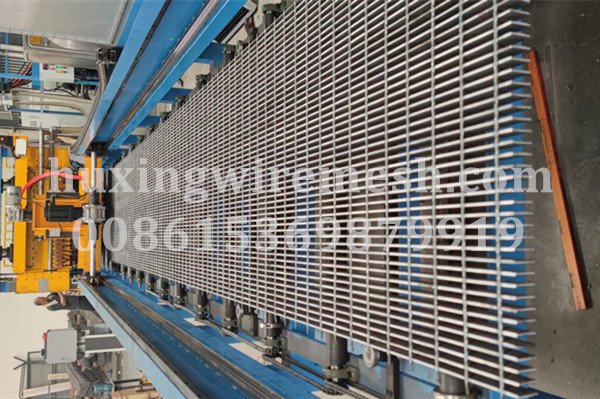
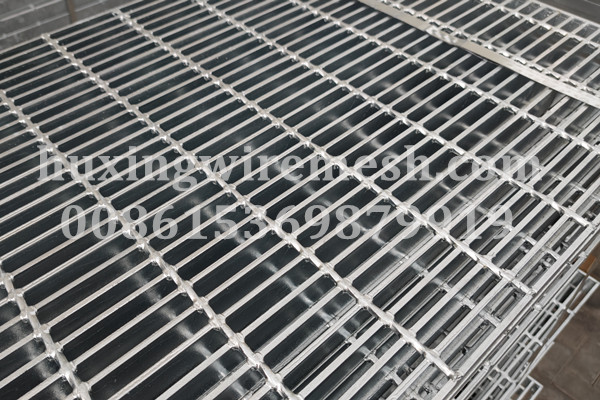
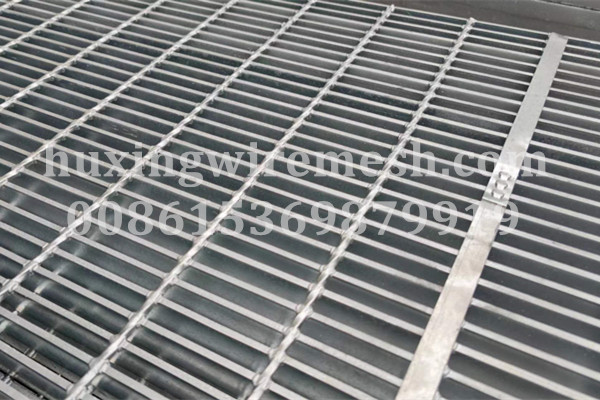
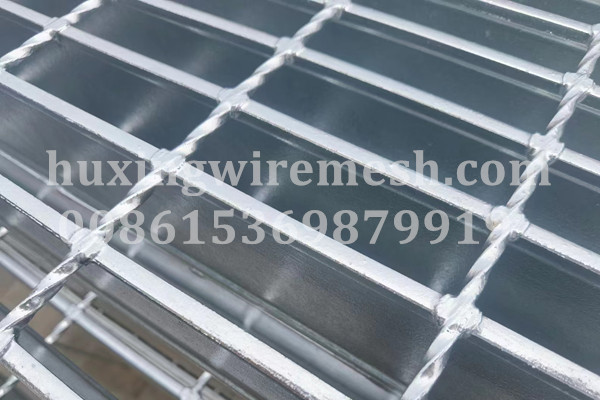
This heavy duty bar grating is a welded steel deck panel. Flat bearing bars run one direction, twisted cross bars are welded across them, and the finished panel is hot-dipped galvanized after welding, so the zinc reaches the welds as well as the bar faces. The open grid carries foot traffic and maintenance loads while letting light, air and water through, which is why it is chosen over solid plate for deck platforms, walkways and stair treads. Plant engineers, facility managers and fabricators use these steel grating panels for new platform construction and for replacing worn checker plate, timber decking or rusted covers on frames that are already standing. - Modular panels that fit an existing frame — Each panel is a finished deck unit, so a platform can be built, extended or repaired one bay at a time instead of cutting and welding a solid sheet on site. - Bar size and pitch chosen for the load — Bearing bars from 25 x 3 mm to 70 x 5 mm and a bearing bar pitch from 20 mm to 40 mm let you close the grid where equipment loads are heavy and open it where they are light. - Serrated bars where the deck gets wet or oily — The notched profile gives boots and tools an edge to bite on, which is why serrated bars are the usual choice for stair treads, ramps and outdoor walkways. - Galvanizing applied after welding — Zinc reaches the weld collars and bar ends, the two places where an uncoated panel usually starts to rust first. - Built for industrial grating duty — The welded grid is made for plant decks that carry trolleys, tools and maintenance traffic every shift, not just occasional footfall. - An open surface that drains and sweeps clean — Spills, wash-down water and snow melt fall through the grid, and the deck can be hosed or swept without lifting panels. - Supply built around your panel list — As a steel grating company we weld and finish to your own schedule, so panels arrive in the sizes that fit the frame rather than in catalogue sizes that then need trimming on site.
Material & Finish Options
Carbon steel with hot-dipped galvanizing
Carbon steel is the default build for deck platform grating. The welded panel is dipped after fabrication, so the zinc bonds to the bearing bars, cross bars and welds instead of sitting on the surface the way paint does. Where the coating is scratched in service, the zinc beside the damage corrodes first and protects the steel next to it, and a grey patina on a working deck is normal rather than a fault. Zinc thickness is set at the galvanizing stage, so if the site is aggressive, ask for the coating specification in writing and compare offers on that basis — it is what keeps a steel grating platform serviceable through years of weather.
Painted carbon steel
Carbon steel can also be supplied painted where the deck is on show or has to match surrounding steelwork in colour. Paint is a finish choice rather than a corrosion upgrade: the film needs repairing when it is damaged, while galvanizing protects itself.
Stainless steel 304 and 316
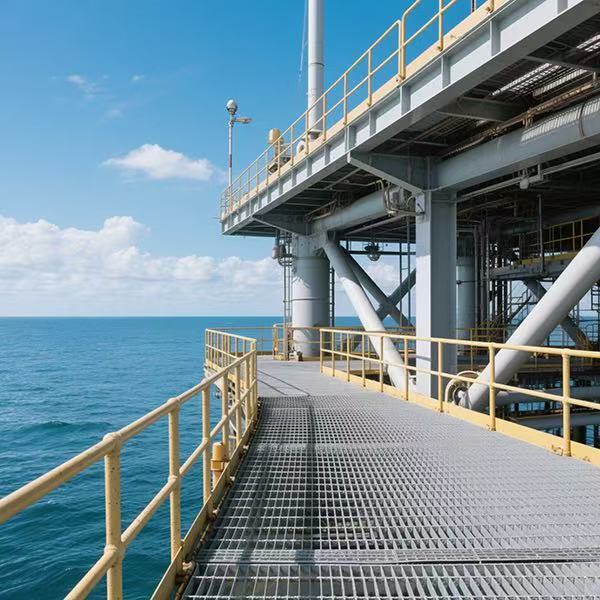
Both stainless grades are produced for this grating. Grade 304 covers general wash-down and atmospheric exposure. Grade 316 contains molybdenum and is the grade to specify where chlorides are present — salt spray on a coastal deck, brine in a food plant, or chemical splash in a process area. Stainless panels are supplied bare, because the alloy carries its own corrosion resistance and does not rely on a coating.
Choosing between the options comes down to the environment rather than the price. An indoor plant deck with occasional wash-down is well served by galvanized carbon steel; coastal, chemical and food-processing areas usually justify stainless.
When buyers compare steel grating panels from different suppliers on the same panel size, the detail that separates one quote from another is whether the bar schedule follows the drawing and whether the welds run clean and continuous along the full bar.
Installation & Fixing
- Match the bundle marks to the panel schedule before lifting anything — steel grating suppliers bundle by panel code, and checking marks at ground level saves rework at height.
- Lay each panel with the bearing bars running across the supports and the bearing bar pitch set as drawn, so load travels down the bars into the steel frame rather than along a single beam.
- Work from one end of the deck and keep joints even; a consistent gap between panels keeps the walking surface level and leaves room for movement in the frame.
- Fix with saddle clips or tack welds as shown on the fixing detail, and check that no panel rocks before the next one goes down.
- Trim only where the drawing calls for it — cut the industrial grating square, keep the cut line clear of cross bar ends, and de-burr before the panel is set.
- Walk the finished deck and check joints, edge gaps and fixings before handover.
- Keep the panel list and bar schedule with the deck file; our team supplies both with the order and can talk your installer through the fixing sequence before the panels ship.
Deck Platform Applications
- Plant and mezzanine deck platforms — Working decks around tanks, mixers, conveyors and service valves, where a deck platform grating carries tools and maintenance loads as well as people.
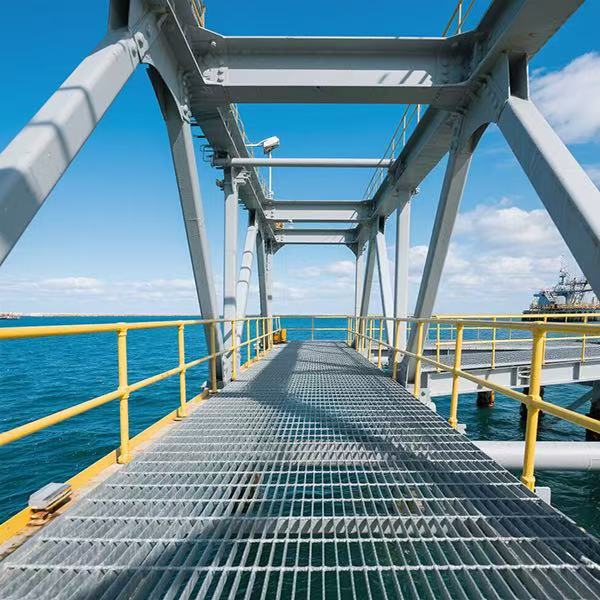
- Walkways between process areas — Access routes across a site, including outdoor runs where rain and wash-down water drain straight through the grid instead of pooling on the surface.
- Stair treads and landings — Serrated bearing bars are the usual specification here, because a tread keeps its grip when boots are wet, oily or caked in dust.
- Ventilation and drainage covers — Shaft covers, trench guards and cooling-air openings, where the open area of the grid does the job a solid cover would block.
- Outdoor and exposed platforms — Decks that sit in weather year-round, where the galvanized finish and the open grid do the work that repainting and drainage channels would otherwise have to.
- Guarding and perimeter infill — Steel grating panels are also cut and framed as infill for machine guards and site fencing.
Specifications
| Material | Carbon steel as standard; stainless steel 304 or 316 on request |
| Construction | Welded bearing bars with twisted cross bars |
| Bearing bar size | 25 x 3 mm up to 70 x 5 mm |
| Bearing bar pitch | 20 mm, 25 mm, 30 mm, 40 mm |
| Cross bar diameter | 6 mm or 8 mm |
| Cross bar pitch | 50 mm or 100 mm |
| Bar profile | Serrated flat bar, plain flat bar, I-type bar |
| Panel size | 1 m x 1 m up to 914 mm x 5800 mm |
| Surface finish | Hot-dipped galvanized; painted carbon steel available |
| Typical uses | Deck platforms, walkways, stair treads, ventilation and drainage covers |
| Panel code | Bearing bar |
| Cross bar | Bearing bar pitch |
| Cross bar pitch SG253 | 25 x 3 mm |
| 6 mm | 20, 30, 40 mm |
| 50, 100 mm SG254 | 25 x 4 mm |
| 6, 8 mm | 20, 30, 40 mm |
| 50, 100 mm SG255 | 25 x 5 mm |
| 6, 8 mm | 20, 30, 40 mm |
| 50, 100 mm SG304 | 30 x 4 mm |
| 8 mm | 20, 30, 40 mm |
| 50, 100 mm SG305 | 30 x 5 mm |
| 8 mm | 20, 30, 40 mm |
| 50, 100 mm SG355 | 35 x 5 mm |
| 8 mm | 20, 30, 40 mm |
| 50, 100 mm SG404 | 40 x 4 mm |
| 8 mm | 20, 30, 40 mm |
| 50, 100 mm SG405 | 40 x 5 mm |
| 8 mm | 20, 30, 40 mm |
| 50, 100 mm SG455 | 45 x 5 mm |
| 8 mm | 20, 30, 40 mm |
| 50, 100 mm SG505 | 50 x 5 mm |
| 8 mm | 20, 30, 40 mm |
| 50, 100 mm SG605 | 60 x 5 mm |
| 8 mm | 30, 40 mm |
| 50, 100 mm SG705 | 70 x 5 mm |
| 8 mm | 30, 40 mm |
| 50, 100 mm | |
Bearing Bar Surface & Upkeep
- Serrated and plain bars are produced in the same bar sizes and pitches, so the profile changes the walking surface and grip, not the load capacity of the panel. Choose the profile after the bar schedule is fixed.
- Specify serrated bars for stair treads, ramps, outdoor walkways and any deck where rain, wash-down water, oil or dust reaches the surface. The notches cut across the top edge of each bearing bar give boots and tools an edge to bite on.
- Choose plain bars for dry maintenance platforms, service bays and covers where trolley wheels cross the deck and the surface is swept often. The flat top is easier to clear with a broom and gives wheels a smoother run.
- Mixed layouts are common on one steel grating platform: serrated panels on access routes, treads and ramps, plain panels on dry equipment bays. Keep the profile recorded against each panel code so later extensions match the original deck.
- Treat the zinc coating as the working surface. Do not wire-brush or grind sound galvanizing back to bright steel during cleaning; remove dirt, grit and spillage, then rinse with clean water and let the deck drain.
- Every cut end, drilled hole and weld scar made on site exposes bare steel. Clean the area, apply a zinc-rich repair compound to the damaged zone before the panel is fixed, and repeat the repair if the deck is modified later.
- During inspections, look at cut edges, welds, fixing points and any place where water sits against the bars. If panels are stored before installation, keep bundles off damp ground and let air move between layers so trapped moisture does not stain the galvanized surface.
Ordering & Delivery
- Send the panel list or drawing for each panel: length, width, bearing bar size, bar pitch, bar profile, material and finish. A steel grating company can only build to what that schedule says, so it is worth checking every line before it leaves your desk.
- We check the sizes against the bar stock and production range, then come back with the panel list confirmed line by line; nothing moves to production until that list matches what you intended.
- Approve the panel list before production starts — bar size, pitch and finish are fixed at that point.
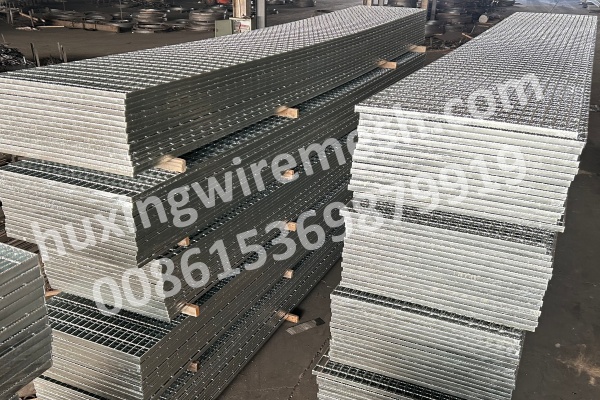
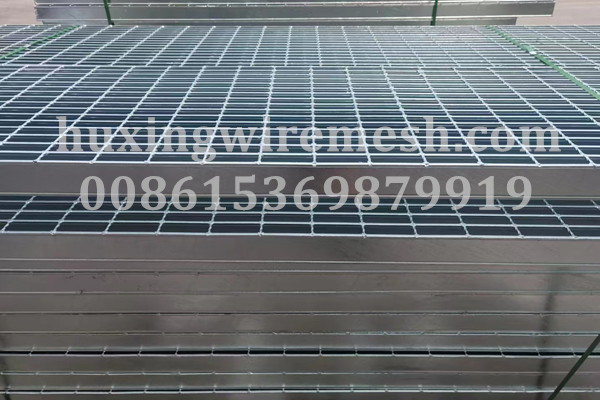
- Panels are welded, galvanized and packed as strapped bundles on wooden pallets, with timber spacers between layers so coating and edges survive shipping and handling.
- Shipping is arranged to your destination port. Ask your sales contact for the current lead time, payment terms and shipping basis — steel grating suppliers quote these against the panel mix and the route, so they change with the order.
- Check the bundles before signing off on delivery and photograph anything that has shifted or been damaged in transit, so it can be put right quickly.
Scale & Supply Capability
Anping Huxing Wire Mesh Products Co., Ltd. is a factory-direct supplier serving construction, manufacturing, security, agricultural and infrastructure buyers. We quote and produce for bulk orders as well as OEM work, building deck platform grating to buyer drawings and agreed specifications rather than catalogue sizes alone. Because we manufacture across several industrial metal product lines, a single order can combine items and be packed and shipped together. Our team stays with you from enquiry through dispatch, confirming production and delivery plans against your quantities, sizes and destination port.
FAQ
How does heavy duty bar grating differ from standard grating?
On this build the bars are wider and thicker and the spacing between them is tighter, so the same panel carries more load with less deflection. A heavy duty deck is normally specified where trolleys, tools or maintenance equipment cross the surface, or where the span between supports is long. Standard light grating handles occasional foot traffic; the heavier grid is what keeps a working platform stiff under daily use.
Which materials can I order for this grating?
Carbon steel is the standard material, supplied hot-dipped galvanized, and stainless steel 304 and 316 are also produced. Grade 304 suits general indoor and outdoor exposure with regular wash-down; grade 316 is the choice for salt spray, brine and chemical splash. For industrial grating that will be hosed down and exposed to chlorides, the grade usually decides how long the deck lasts.
Can the panels be made to my own length, width and finish?
Yes. Panels are produced from 200 mm to 6000 mm in length, and width follows the layout you send. Finish is confirmed with the panel itself — hot-dipped galvanized as standard, painted carbon steel where colour matters, or bare stainless steel. Each steel grating panel is then packed against the list so the right panel reaches the right opening.
Should I choose serrated or plain bearing bars?
Serrated bars are the usual choice for walkways, ramps and stair treads, and anywhere the deck sees water, oil or dust, because the notches give boots and wheels an edge to grip. Plain bars give a flatter, easier-to-sweep surface and suit maintenance platforms that stay dry and see trolley wheels more than heavy boots. Both profiles are produced in the same bar sizes, so the decision is about grip rather than panel size.
What upkeep does the hot-dipped galvanized finish need?
Very little in normal service. The zinc protects the steel by corroding first, so light dulling or a grey patina is normal and does not need treatment. What does need attention is damage: cut edges, weld scars and scratches made during installation should be touched up with a zinc-rich repair compound so rust does not start at those points. On decks with heavy chemical exposure, wash down occasionally and inspect the coating at the same time as the frame.
Can I order matching panels later for an extension?
Yes. Give us the panel code, or the bar size, pitch and profile from the original order, and the same build is produced. A steel grating company working from a written panel list can keep a deck consistent across phases, so an extension does not end up visibly different from the platform it joins.